
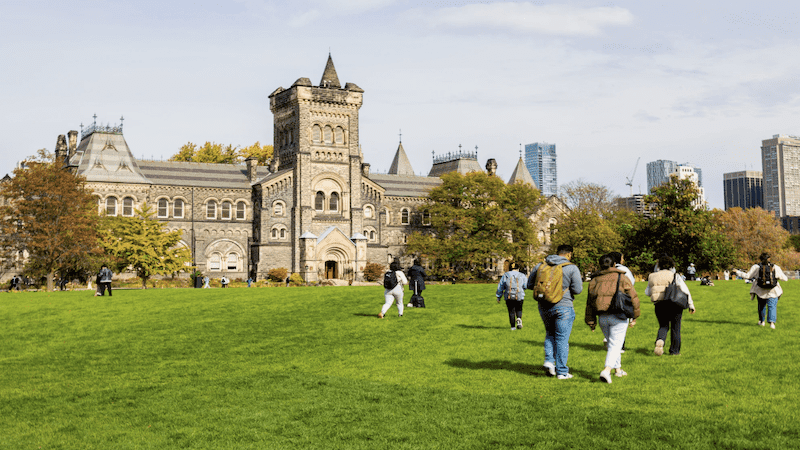
Like its southern neighbour, the United States, Canada is a vast and expansive country. However, unlike the U.S., only a relatively small portion of Canada is populated. As a result, the country’s higher education system is not as large or complex as one might expect. In this post from Shimen Fallah Immigration Blog, we will explore the best universities in Canada for PhD studies in 2025.
Research Universities and Graduate Schools
There are about 100 research universities in Canada that offer PhD programs. Institutions such as liberal arts colleges or community colleges also operate in the country, but they generally do not provide doctoral programs. Most universities run their PhD courses through Graduate Schools.
Canadian universities may be public or private, depending on their funding sources:
-
Provincial or territorial governments fund public universities (the majority) and usually offer a wide range of study programs, including PhD degrees.
-
Private universities are typically supported by third-party organisations such as religious institutions and are smaller and more specialised.
Universities in Canadian Provinces and Territories
Because of its vast geography and historical background, Canada has a federal structure consisting of 10 provinces and 3 territories. Provinces have a degree of autonomy similar to U.S. states, while territories are governed directly by the federal government.
Only the provinces have research universities authorised to offer doctoral programs.
The region in which you choose to study can affect both the language of instruction and the type of funding available. Generally, PhD programs are offered in English, French, or both.
Below is an overview of the Canadian provinces and their universities that offer PhD programs:
Provinces of Canada and Universities Offering PhD Programs
-
Alberta
A western province known for its forests, prairies, and mountain ranges. It has five universities offering PhD programs, and the official language is English. -
British Columbia
The westernmost province of Canada, famous for its scenic landscapes, coastal fjords, and temperate rainforests. It has seven PhD universities, with English as the official language. -
Manitoba
A central province characterised by wide prairies and several of Canada’s Great Lakes. It has two universities offering PhDs in English. -
New Brunswick
A small eastern province with forests and mountains, home to some of the oldest European settlements in North America. It has two universities offering PhDs in English and French. -
Nova Scotia
A coastal province in eastern Canada consisting of a peninsula and nearby islands. It has five universities offering PhD programs in English. -
Newfoundland and Labrador
Canada’s easternmost province, featuring mountainous terrain and subarctic tundra. It has one PhD university, and the official language is English. -
Ontario
The most populous province in Canada and home to the capital city, Ottawa, as well as Lake Ontario and Niagara Falls. It has 22 universities offering PhD programs in English. -
Prince Edward Island
The smallest province in Canada, made up of the main island and several smaller ones. It has one PhD university, and the language of instruction is English. -
Québec
Canada’s largest province by area, rich in independent Québécois culture. It has 17 universities offering PhD programs, and the official language is French. -
Saskatchewan
A large province in central Canada with prairies and lakes. It has two universities offering PhD programs in English.
The three Canadian territories — Yukon, Nunavut, and the Northwest Territories — have colleges offering undergraduate degrees, but do not currently have universities with doctoral programs.
Table of Canada’s Top Universities for PhD Studies in 2025
The table below lists the top 20 universities in Canada for PhD studies in 2025, based on the most recent rankings from Times Higher Education (THE), QS, and the Academic Ranking of World Universities (ARWU).
| Rank | University | THE 2025 | QS 2025 | ARWU 2024 |
|---|---|---|---|---|
| 1 | University of Toronto | 21 | 25 | 26 |
| 2 | University of British Columbia | 41 | 38 | 47 |
| 3 | McGill University | 45 | 29 | 74 |
| 4 | McMaster University | =116 | =176 | 101–150 |
| 5 | University of Alberta | =116 | 96 | 101–150 |
| 6 | University of Montreal | 125 | =159 | 151–200 |
| 7 | University of Waterloo | =163 | 115 | 151–200 |
| 8 | University of Ottawa | =191 | 189 | 201–300 |
| 9 | University of Calgary | 201–250 | =198 | 151–200 |
| 10 | Western University | 201–250 | =120 | 201–300 |
| 11 | Université Laval | 251–300 | =423 | 301–400 |
| 12 | Dalhousie University | 301–350 | =275 | 301–400 |
| 13 | Queen’s University | 301–350 | 193 | 201–300 |
| 14 | Simon Fraser University | 301–350 | 319 | 301–400 |
| 15 | University of Victoria | 301–350 | 349 | 301–400 |
| 16 | University of Saskatchewan | 351–400 | =340 | 401–500 |
| 17 | University of Guelph | 401–500 | =456 | 501–600 |
| 18 | University of Manitoba | 401–500 | 661–670 | 201–300 |
| 19 | York University | 401–500 | =362 | 401–500 |
| 20 | Carleton University | 501–600 | 741–750 | 501–600 |
Conclusion
Pursuing a PhD degree in Canada is an excellent opportunity for international students. With its world-class universities, multicultural environment, and strong education system, Canada stands among the top global destinations for graduate studies.
Depending on the province of study, students can enrol in programs offered in English or French, and enjoy access to advanced research facilities, diverse scholarships, and a high quality of life.